

Imagine holding a lightweight titanium implant shaped exactly to match a patient’s bone, or a jet engine bracket with internal cooling channels no machine could carve. These parts don’t come from molds or machining. They are built atom by atom from metal powder. Metal 3D printing makes this possible, and understanding how does a metal 3D printer work opens the door to one of the most disruptive technologies in modern manufacturing.
This guide explains the core technologies behind metal additive manufacturing. You will learn how powder becomes precision parts, the differences between major printing methods, and what to consider when choosing a process for your application.
Powder Bed Fusion: The Leading Metal Printing Method
The most widely adopted answer to how does a metal 3D printer work is powder bed fusion. This method uses a thin layer of metal powder and a focused energy source to build parts layer by layer.
Selective Laser Melting (SLM)
Selective Laser Melting uses a high-power fiber laser to fully melt metal powder into solid structures. A recoater spreads a fresh layer of powder across the build platform, the laser scans the cross-section of the part, and the platform drops slightly. This cycle repeats until the part is complete. Layer thickness typically ranges from 20 to 60 microns, allowing fine detail and smooth surfaces.
Common SLM materials include:
– Stainless steel
– Titanium alloys such as Ti6Al4V
– Inconel nickel-based superalloys
– Aluminum alloys like AlSi10Mg
Electron Beam Melting (EBM)
Electron Beam Melting swaps the laser for a focused electron beam inside a vacuum chamber. The vacuum prevents electron scattering, while high preheat temperatures reduce residual stress in finished parts. EBM prints faster than SLM but produces rougher surfaces and slightly lower resolution. It is ideal for titanium parts in aerospace and orthopedic applications.
Core Hardware Inside Every PBF System
Every powder bed fusion printer relies on a few critical components working in sync.
Sealed Build Chamber with Inert Gas
The build chamber fills with argon or nitrogen, keeping oxygen below 1000 parts per million. This prevents oxidation and ensures clean, strong welds between layers.
Recoater Blade or Roller
A hard blade or rotating roller spreads powder into a uniform layer before each pass. Uneven spreading causes defects like balling, porosity, or incomplete fusion.
Energy Delivery System
Fiber lasers in SLM systems range from 200 to 1000 watts. Electron guns in EBM systems reach up to 6 kilowatts. Galvanometer mirrors or magnetic coils steer the beam at high speed across each layer.
Directed Energy Deposition: Printing and Repairing Large Parts
Directed Energy Deposition (DED) offers a different approach to how a metal 3D printer works by melting material as it leaves the print head.
Nozzle-Based Metal Printing
DED feeds metal powder or wire through a multi-axis nozzle while a laser, electron beam, or plasma arc melts it on contact with the surface below. The print head moves freely in three dimensions, allowing repairs and large structures.
Typical applications include:
– Repairing worn turbine blades
– Adding material to existing forgings
– Printing large ship or structural components
DED handles bigger builds than PBF but with lower resolution and more post-processing.
Hybrid Additive and Subtractive Systems
Many manufacturers mount DED heads on CNC machines. The printer builds a near-net shape, then cutting tools machine critical surfaces to final tolerance. This hybrid approach saves material and shortens lead times.
Binder Jetting: Printing Metal Without Melting
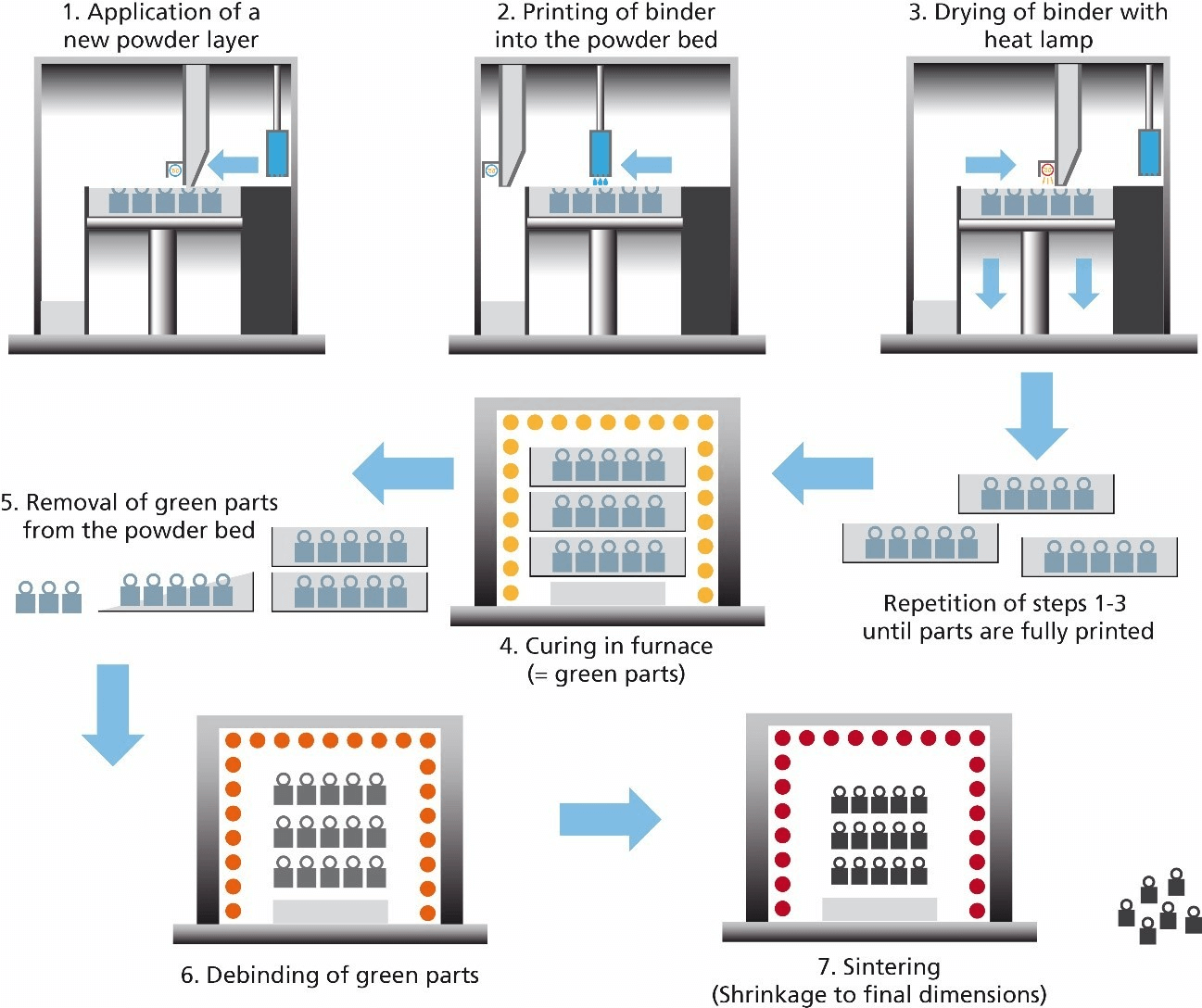
Binder jetting answers how does a metal 3D printer work without lasers or extreme heat. Instead, it uses a liquid binder to glue metal powder into shape.
Layer-by-Layer Adhesion Process
A print head jets tiny droplets of binder onto a powder bed, selectively gluing particles where the part should form. Once printing finishes, the “green” part moves to a furnace for post-processing.
Post-processing stages include:
1. Debinding to remove the binder
2. Sintering to fuse metal particles at high temperature
3. Optional infiltration with bronze to fill remaining pores
Why Manufacturers Choose Binder Jetting
Binder jetting offers clear advantages for high-volume production:
– No lasers or vacuum chambers required
– Entire layers printed in seconds
– Lower energy consumption
– Cost-effective for small parts
Common products include dental crowns, watch cases, and industrial nozzles.
Support Structures and Design Guidelines
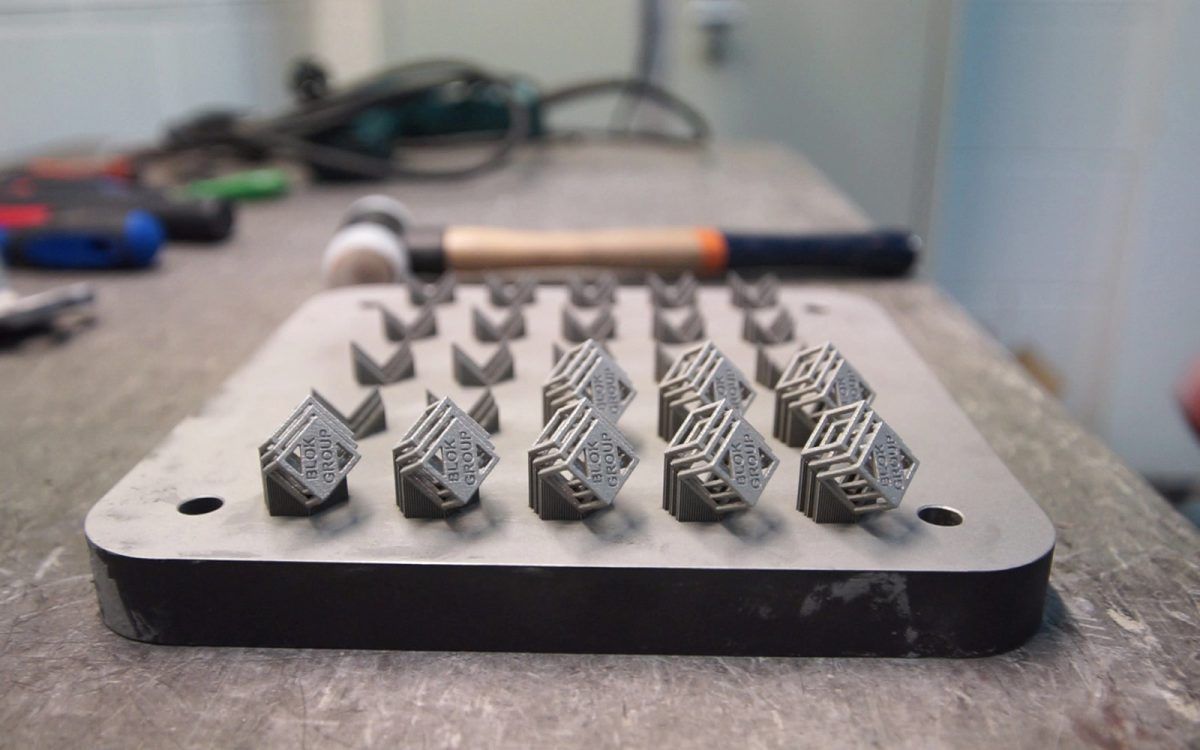
Even the most advanced metal 3D printer depends on support structures to manage heat and gravity during the build.
Why Parts Need Supports
Overhangs greater than 45 degrees and sharp internal angles can collapse or warp without anchors. Supports attach parts to the build plate, conduct heat away from the melt pool, and prevent layer separation. SLM parts especially need supports because of high thermal gradients.
Reducing Support Through Smart Design
Engineers minimize support material by:
– Orienting parts to limit overhangs
– Using lattice or self-supporting geometries
– Adding fillets to sharp internal corners
Less support means faster post-processing and lower material costs.
Post-Processing: From Raw Print to Finished Part
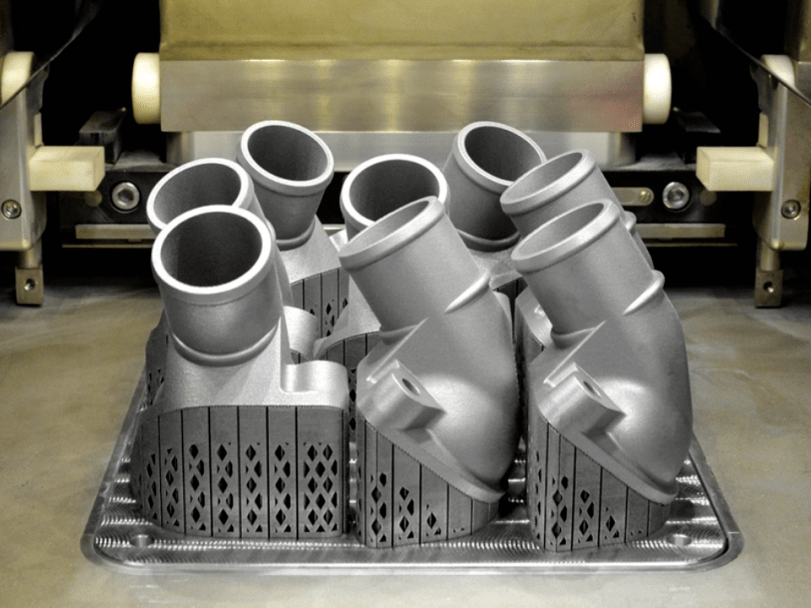
A printed metal part is rarely ready for use right out of the machine. Post-processing refines strength, accuracy, and surface quality.
Heat Treatment for Strength and Stability
Rapid heating and cooling during printing create internal stress. Thermal treatments solve this problem:
– Stress relief annealing reduces distortion
– Hot Isostatic Pressing (HIP) eliminates micro-porosity
– Solution treatment and aging hardens precipitation alloys
Surface Finishing Options
As-printed surfaces are typically rough. Finishing choices depend on the application:
– Blasting smooths surfaces with abrasive media
– CNC machining achieves tight tolerances
– Electropolishing improves corrosion resistance
– Coatings add wear or thermal protection
Material Selection and Powder Management
Choosing the right alloy shapes every part of the printing process, from machine settings to final performance.
Popular Metal Alloys for Additive Manufacturing
| Material | Key Properties | Typical Applications |
|---|---|---|
| Stainless Steel 316L | Corrosion-resistant, ductile | Marine, chemical, medical |
| Ti6Al4V Titanium | High strength-to-weight ratio, biocompatible | Aerospace, implants |
| Inconel 718 | Heat and creep resistant | Jet engines, turbines |
| AlSi10Mg Aluminum | Lightweight, thermally conductive | Automotive, heat exchangers |
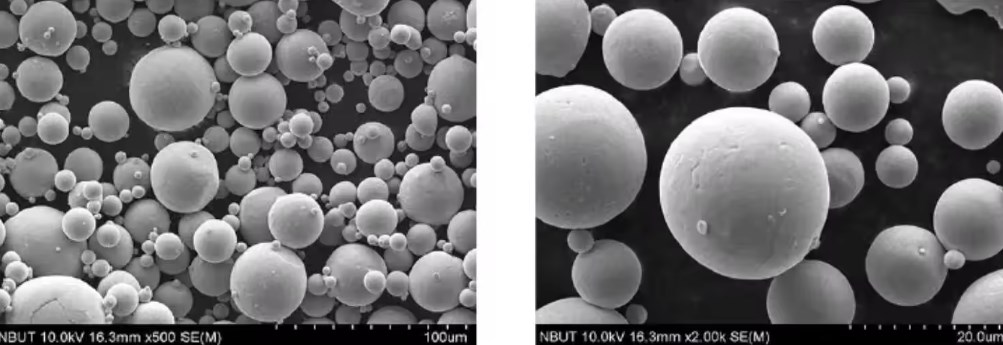
Powder particles must be spherical and free-flowing for consistent layer spreading.
Reusing Unused Powder
Most systems recycle unsintered powder by blending it with 30 to 50 percent virgin powder. Reused powder gradually absorbs oxygen and moisture, which can affect print quality. Regular sieving and testing keep the powder within specification.
Safety Considerations in Metal 3D Printing
Operating a metal 3D printer involves real hazards that demand strict safety protocols.
Fire and Explosion Risks
Fine metal powders ignite easily, especially when oxygen levels rise or static builds up. Key safety practices include:
– Maintaining inert atmosphere in build chambers
– Using explosion-proof enclosures
– Grounding all equipment
– Cleaning powder residue regularly
Personal Protective Equipment
Operators handling powder should wear:
– Flame-resistant clothing
– NIOSH-approved respirators
– Safety goggles
Proper training covers emergency shutdowns, spill response, and lockout/tagout procedures.
Frequently Asked Questions About Metal 3D Printing
What is the most common metal 3D printing process?
Powder bed fusion, especially Selective Laser Melting, is the most widely used metal additive manufacturing method. It produces dense, high-resolution parts for aerospace, medical, and industrial applications.
How thick is each printed layer?
Most metal 3D printers build layers between 20 and 60 microns thick. Electron beam systems sometimes use thicker layers for faster builds, while binder jetting can reach 100 microns or more.
Can metal 3D printed parts be as strong as traditionally machined parts?
Yes. With proper heat treatment and hot isostatic pressing, metal 3D printed parts can match or exceed the strength of cast or machined components. Density often exceeds 99.5 percent in optimized SLM processes.
What metals are easiest to print?
Aluminum alloys and stainless steels are generally the easiest to print due to their forgiving thermal properties. Titanium offers excellent strength but requires careful atmosphere control, while Inconel demands high laser power.
Is metal 3D printing expensive?
Equipment and powder costs are high, but metal 3D printing reduces material waste and eliminates tooling. For complex parts in low to medium volumes, total costs can be lower than traditional manufacturing.
How long does a metal print take?
Build times range from several hours to multiple days, depending on part size, geometry, layer thickness, and printer speed. Post-processing adds additional hours for heat treatment and finishing.
Final Thoughts on How Metal 3D Printers Work
Metal 3D printing is precision engineering driven by controlled energy, advanced software, and high-purity metal powders. The three dominant technologies, powder bed fusion, directed energy deposition, and binder jetting, each offer unique strengths for different applications. Understanding their differences helps you choose the right process for strength, resolution, speed, or cost.
To apply this knowledge, start by defining your part’s requirements: mechanical loads, surface finish, production volume, and budget. Match those needs to the right printing technology and material, then partner with an experienced service bureau or equipment vendor. As metal additive manufacturing continues to evolve, mastering these fundamentals positions you to take full advantage of one of the most powerful tools in modern production.


